Saturday, December 3, 2011

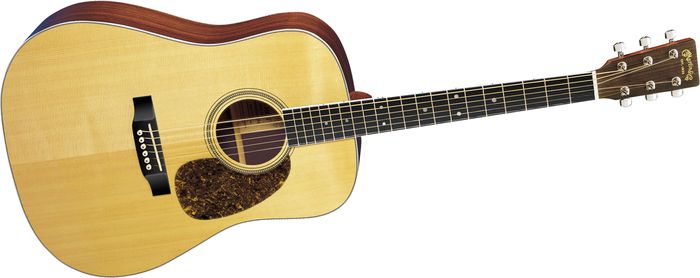
The Taylor 810


The Taylor 810 is the Martin D 28's number one competitor in the US market for a full sized, solid wood construction, rosewood and spruce guitar. ....and I don't care what the Martin nuts, or anyone else says about Taylor guitars - they DO compete, and they do it very, very well.

I do NOT consider this guitar to be a copy of a Martin D 28, it's dimensions are different, and Taylor has it's own unique bracing system, and so their guitars are voiced differently than are Martins, and they do have their very own unique tonal characteristics (as do, in fact, every single last guitar ever made...) - and folks like myself can actually hear the difference between a Martin and a similar or competitive model by Taylor.

I've known about Taylor guitars for quite some time - longer than this guy who's put together this website that I'm going to link you to, but I do like his site, and ....basically, I just already like people that like acoustic guitars!

http://www.no-bozos.com/TheTaylors.html


What you need to know is that though older guitars - played guitars, broke in guitars - always sound better than they did new, and that all Taylor guitars have always sounded great to begin with.....Taylor DID change their bracing pattern....to provide even more volume than they already provided.  Taylor guitars, and I do mean this - are built for volume, tone, and clarity - they also happen to be beautiful.    Have a bit of a listen:


Now, I truly like this little clip up above, this guy is playing a fine old traditional blues tune that lots of folks play, but is especially associated with Doc Watson.  This guy isn't showing off himself at all here, he's playing at a very reasonable temp, playing loud and clear.  I think he's showing off his guitar, and as awesome as his Taylor 810 sounds - hell, I'm showing off his guitar too!

Now the Taylor 810 is a rosewood body, spruce top, and mahogany neck dreadnought of all solid wood, fourteen frets clear of the body - and with various and sundry combinations of rosewoods and spruce available - but as is standard for D 28 style guitars these days, we're primarily talking about Sitka Spruce, and East Indian Rosewood.

You can always identify a Taylor guitar by their distinctive pick guard shape, and by their trademark head stock shape - very fine instruments, one and all.

On the net I'm pricing these first rate studio or professional and serious amateur level dreadnoughts based on the Martin D 28 theme, but not the D 28 design used for around $1,300.00 - $1,900.00

I'm finding new ones for just under three thousand dollars.  Most Taylor guitars come with Fishman electronics - basically, they're ready to plug in, or play acoustic.

Obviously, if you find an older one that is Brazilian rosewood, or one that was custom ordered with a rare species of spruce for a soundboard - the prices will go higher.

Whenever someone asks me about buying used guitars - I tell them to find the ugly scratched up one that's got a straight neck, and sings like an angel - I'm into tone and play-ability -cosmetics or beauty on an instrument is just icing on a cake.


Tuesday, November 29, 2011

The Martin D 42

I can't claim to have ever truly understood the WHY of the D 42, but I don't pretend to own C.F. Martin & Co., or to have any stock in the company.  I'm just a huge fan - that's all.

Yes, of course I understand that it's $7,500.00 for the base level Martin D 45, and that lots of folks wished that they could afford a D 45...can't, and instead buy a D 42.

But come on!  It's five grand for a D 42!  It's just a prettier D 28!  Hell, that's what the D 45 is!

Oh, please don't, you D 42 owners, think that I'm not in love with your beautiful guitars.  I've never owned anything that pretty; and I love Martin instruments.   I only wish that the niche had been filled for a Mahogany dreadnought dressed up as pretty or prettier than a D 28....and were it me, I'd have called it...A D 42.


For the record - that's not me in the video.  I do agree with what all this fella is saying in every way.  I'm not someone that ever really understood the purpose of buying a brand new guitar, when used ones always sound better.  It's just physics, folks, and if you're shopping for something that's just "pretty" then you're not in the know of why folks love Martin instruments to begin with.  This dude's guitar sounds GREAT!

I talk to folks all over the entire internet all the time.  I'm not the least bit shy about that - and after watching that video up above - DAMN I LIKE THAT DUDE'S CHOICES OF MUSIC!

I'm going to take a moment and subscribe to him, and thank the dude for his video.
Lots of options available from the Martin custom shop! 

Bumbinga is a tonewood well worth exploring.  I am a

Earth lover, and supporter of alternative tonewood instruments - no, I do not much care for the U.S. Government's persecution of Gibson guitars, but I do support laws that are aimed at preventing the depletion of forests, and the loss of one single solitary species of tree.  Rosewoods are great!  I love rosewood!  I love rosewood so much that I don't ever wish for we Earthlings to be without it, fair enough?

For more on alternative tonewoods:

http://www.infobarrel.com/Alternative_Tone_Woods_For_Guitar_Soundboards


In the above video you can hear a D 42 fingerpicked a little, Martin dreadnoughts work just as well for fingerstyle playing as they do for flatpicking.  If you bother to look at that video on Youtube, and then look at the comments you'll see someone say something like:

"The bone nut, saddle, and bridge pins make all the difference"

Well, yes and no.  Martin guitars sometimes come with bone nut and saddles already, I'm not sure that any of them come with bone bridge pins, or not - I need to fact check on that particular, but I will say here that bone nuts, saddles, and bridge pins DO make a difference, and I personally endorse that upgrade for someone who is an audiophile like myself, and who can afford that upgrade.  If you can't do it yourself, any really good decent sized guitar store will have a tech that can install that stuff for you.

The Martin D 16

Mahogany dreadnoughts are simply awesome, and I'm never going to be able to stop kicking myself for selling my Martin D 18GE that I used to own.  I sold the thing because I was depressed, broke, and owned another guitar already that was far too good for my skill level to justify.


Broke is one thing, but trying to rationalize the ownership of an instrument based upon the players level of skill is ridiculous.  You don't have to be Tony Rice to enjoy a fine guitar.  Thinking that one must be a great guitarist to own an outstanding guitar (or three!) is like saying that an ugly dude shouldn't be married to a beautiful woman.  It's not something that is anyone else's business.


Anyway.....


The D 16 is a cannon of an instrument.  Martin's mahogany dreadnoughts are superb, and have a sound that is undeniably different than the rosewood guitars, and altogether something that, to me, just cuts to the bone.  I can't believe that I don't own one at present.


IT HURTS!


Whenever I do have some folding money to spend again on a guitar, I'm going to look into a D 16, but I prefer to shop used for high end guitars.  I know what I'm doing.


Looking at D 16s, the things look just like a D 18.  It gets sort of weird to me when I consider that Martin makes some D 16s with an Adirondack top.  Thing is, upon closer inspection of a D 16....it's NOT exactly mahogany, but rather, a very close cousin of mahoganysapele.  Sapele is an outstanding tonewood, btw, and don't think that it's not.  Also in production is the D 16GT, which is a rosewood body instrument.


So what is going on here?


The 16 is relative to an experimental Martin bracing pattern, and the verdict is that the experiment WORKS!


These solid wood Martin's are selling new at just over a grand.  I can't tell you enough what a bargain that is for these types of instruments.  You want one with Adirondack spruce on the soundboard?  You can have one, it's only going to cost you about twice as much.


Sunday, November 27, 2011

The Dan Tyminski D 28

The Dan Tyminski D 28 is just different.  It is not at all like the modern HD 28v's - it is purposefully braced with not a High X, but a LOW X bracing because that's how Dan wanted the thing.

If you don't know, then the positioning of the X braces make a huge difference in the sound of any guitar.  Yes the rosewood and spruce are important, and yes, also important here are the specific cuts of wood.....

It's a Martin, dude, it's going to be great.

Here's more:


MARTIN D-28 DAN TYMINSKI GUITAR & CASE
Custom Artist Edition - Designed for Dan Tyminski who wanted a guitar to take on the road that sounded as much as possible like his 1946 D-28 - Indian rosewood with Adirondack spruce top, Golden Era style scalloped braces with the X in the rear position (as on the Martin D-28 1941 Museum Edition), ivoroid binding, herringbone top trim, tortoise Delmar pickguard. Modified V-shape neck, ebony fretboard (1-11/16" nut, 25.4" scale), diamond and square position markers, ebony bridge with bone saddle. String spacing at saddle is 2-1/4". Waverly nickel open gears with oval buttons. Exceptional sound.
Availability: In Stock Now
sku: D28TYM .. list $5149.00 ours $4149.00 


  1. I don't know about you, but I wouldn't buy this guitar because I'd simply have to think that the forward or HIGH X is always preferable.....but I'm not Dan Tyminsky.
  2. This guitar DOES have the vaunted red Adirondack spruce top that generally costs another thousand dollars than the Sitka spruce top does that is normal or standard these days.
  3. The braces, though rear positioned in regards to the X...are still scalloped, so my contempt prior to investigation should be taken with lots of salt grains.
  4. This ain't a herringbone dreadnought because it's NOT a high X - but it's still going to be a superior instrument in sound and quality than other NON HD 28's because of the scalloped bracing and because of (possibly) the Adirondack spruce top.
  5. Check out the youtube vid for this, and then check out the comments, brother they surely do get entertaining, and yeah, that's me "Wesmantodd1974"

The HD 35

Quite obviously, a D 35 is a different instrument than a D28.  I'm not going to get too much into how not every D 28 ever made has been a herringbone D 28, but I do expect you to either know that, trust me on that, or ask me questions.

I'll tell you no lies.

What's the difference between one with and without the damned herringbone trim anyway?

Quite a lot.

You see, having herringbone trim on a Martin guitar isn't just trim - it also signifies structural differences in the instrument that you can not see with your eyes, but rather, that you WILL hear with your ears.

Herringbone Martin guitars are fragile instruments, more fragile than is normal for something made of wood and glue and enduring large amounts of tension from the elements, the fools unworthy to even touch the thing; and steel strings pulling against glued pieces of wood.


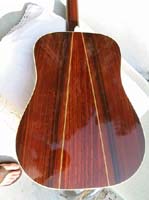
Anyway, that's a D 35's three piece rosewood back.  For more information on what a D 35 actually is, and how and why the HD 35 is special, then I've prepared the following for you.  But before you go to my link with more detail about the Martin HD 35, why don't you have a listen to one first?


Twitter Delicious Facebook Digg Stumbleupon Favorites More

 
Design by Free WordPress Themes | Bloggerized by Lasantha - Premium Blogger Themes | Laundry Detergent Coupons