Saturday, August 25, 2012

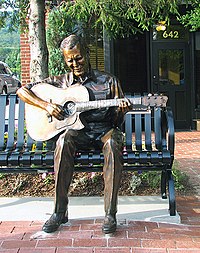
Doc Watson - Folk, Blues, Bluegrass; and musical integrity.


Doc Watson and Musical Integrity.

When I think about America today I'm overcome with sadness for everything that has been lost. People have lost most of the values that made the nation strong - they've mostly all fallen prey to massive amounts of propaganda at the hands of some trillionaires and the completely corrupt mass media cartel of criminals that monopolize all of it.
Divide and conquer. Divided houses will not stand.
But when I think of persons still living that have made a difference - persons of integrity, I then think of people like Noam Chomsky, Ron Paul, and the musical legend - Doc Watson.
Just what is it, young man, that makes you think that Mr. Arthel Lane "Doc" Watson such a man of what you call "integrity?"
Gosh, there couldn't possibly be an easier question for me to answer! Look at what is passed off as "music" by today's media! You have to be young and very pretty to get any attention - AS IF someone's physical level of attraction ever had anything to do with music or musicianship! I almost vomit every time I turn on the radio - have you ever actually heard top 40 "music" for what it is? It's a bunch of sensationalist garbage that someone other than the singer nearly always wrote, the singer must first be a model - and the content of the lyrics is entirely based in sensationalist materialism or lasciviousness that is altogether useless, and mostly forgotten after only a year's time!
The "music" is created by someone other than the singer - who didn't even write the lyrics, and is only a model - and typically doesn't involve any actual musical instruments, but rather, samples and electronic noise tracks created by machines. What would these "musicians" do without their means of amplification, their professional song writers? Would they even be attractive to the legions of media zombies without their tailors, their make up artist, their hair stylist, and the professional photographers? I think not!
Doc Watson is the opposite of every single bit of corruption and lack of talent or integrity found in Rupert Murdoch music land. Doc was born dirt poor in Deep Gap, North Carolina - and became blind before his first birthday due to an eye disease - the peculiar squint of Doc Watson, the fact that he requires no sort of electronics or electricity to perform, and that he was never even truly a professional musician until he was forty years of age show you just where we are as a nation, and where mass media has taken us.
Today's fake musicians who are only models representing the gods of consumerism, materialism, and abiding by the ethos of Live Fast and Leave a Pretty Corpse - that's the best they can hope for. Doc Watson, however, is in his 90's now, and has legions of admirers that actually do love him, and care for him. Very different indeed!

Little Orphan Girl, By Doc Watson

Doc Watson - Little Orphan Girl - Lyrics.

"No home, no home," said a little girl
At the door of a rich man's home.
She trembling stood on the marble steps,
And leaned on the polished wall.

Her clothes were thin and her feet were bare,
And the snowflakes covered her head.
"Let me come in," she feebly said,
"Please give me a little bread."

As the little girl still trembling stood
Before that rich man's door,
With a frowning face he scornfully said,
"No room, no bread for the poor."

Then the rich man went to his table so fine
Where he and his family were fed.
And the orphan stood in the snow so deep,
As she cried for a piece of bread.

The rich man slept on his velvet couch,
And he dreamed of his silver and gold,
While the orphan lay in a bed of snow,
And murmured, "So cold, so cold."

The hours rolled on through the midnight storm,
Rolled on like a funeral bell,
The sleet came down in a blinding sheet,
And the drifting snow still fell.

When morning came the little girl
Still lay at the rich man's door.
But her soul had fled away to its home
Where there's room and there's bread for the poor.

Doc Watson - Guitar Virtuoso.

I remember years ago my uncle Tom, my Grandmother, and I took a trip to Winston Salem, North Carolina. I truly felt there as though I were in the region where the type of music that I enjoy playing and was brought up playing was truly known and appreciated. I picked up Doc Watson's album Then and Now, and a few others. On the long drive back to Texas my Grandmother even joined me in singing along to Corina Corina! I'm positive that not many people these days sing songs with their Grandmothers. I suspect that the lyrics of T.I. and "lady" gag uh are not sufficiently trans generational, and that is because they are only garbage, and will burn like so much chaff in the end.
But Doc Watson has been an American Musical Legend since the 60's Folk Music Revival, and he'd only spent the first 40 years of his life cutting his teeth in preparation for that. The man toured the United States and the world for decades after the Folk Revival stardom came and went, and he even did so with his son, Merle Watson, at his side. Merle, a wonderful musician in his own right, died doing honest work on a tractor on the Watson family farm - but the Watson musical legacy never died. Doc lives on, and has recorded with his grandson, Richard Watson - a guitarist after his father, and his grandfather's hearts.

Windy And Warm, by Doc Watson

The Music Of Doc Watson

There is much to be said for the abilities and the aptitudes of a blind man determined to feed his family that once made a living tuning pianosby ear. How many strings are there on a piano to tune, heck, I don't know - but when you've such an acute sense of sound as that, then a mere six strings is going to be somewhat less challenging for you.
The music of Doc Watson is as vast and varied as his talent. While he brought the term flatpicking to the forefront of Americana almost single handed; he'd also brought his harmonica playing, fingerpicking, and country blues to the masses of white Americans who'd never heard the black musicians years before persons like Eric Clapton, and bands like Fleetwood Mac ever were heard. Doc Watson is Folk, Doc Watson isBluegrass, Doc Watson is Country, and Doc Watson plays the blues.
While tunes such as Windy and Warm will forever be fingerpicked country blues standards, the lightening fast fiddle tunes such asBlack Mountain Rag will forever be what legions of country boys like myself have the most appreciation for. We all want to play that one at some point or another - and we flatpickers can not help this - all the while we know that we can't really every make that tune ours. Doc Watson wouldn't have you believe that the song is his, but we insist that it is his, and will never belong to anyone else - EVER.

Doc Watson - Black Mountain Rag!

Bill Monroe and Doc Watson

Doc Watson - Playing Guitar.

Bill Monroe is nearly always calledThe Father of Bluegrass, and Monroe and Watson recordings are available online and in stores. In fact - some of the most amazing and prolifically fast or up tempo fiddle tunes I've ever heard on record were when Bill and Doc played together. But Bill Monroe had become alarmed when he'd heard that the blind Doc Watson would often do carpentry work with power tools, hammers, and saws. Doc Watson even built himself a shed at one point - by himself. Perhaps sight is over rated in some cases. Monroe had told Doc Watson that he should take better care of his hands, to which Watson famously replied,
"Bill, the good Lord made my hands for more things than picking a guitar."
As stated before here, Doc Watson was a major proponent of bringing black or African American country blues to the fore for white audiences who otherwise would never have listened to any of it. He opened the door in a similar manner to bringing the Black men and women of the blues to white audiences in the same way that Eric Claptonhad done on the electric side of the fence. When questioned about it Watson had this to say,
"I'll tell you, I was exposed to quite a bit of black music, because mountain folk sat kind of in the middle of the road on that. My dad taught us to respect a man because he was a man."
Sure, that isn't so strange nowadays - but you must realize that Watson is in his 90's now, and that playing black country blues in what was surely near all white audiences in the 1960's -was a pretty big deal!
When asked if he was a musical prodigy Doc Watson had this to say about learning to play the guitar,
"It took a lot of hard work, but I had a knack for memorizing certain phrasings and sounds. I'd learn the tunes and words to songs off of old 78 records my family would play, from the time I was a very little boy."
In this text capsule my source for the Doc Watson quotes is the Spring 1990 GuitarEXTRA! magazine, and the interviewer was Gordon Ely.
For anyone interested in my opinion of what is the finest recordings featuring Doc Watson - then I encourage them to purchase the first and original Will The Circle Be Unbroken album by the Nitty Gritty Dirt Band. The Gallagher Guitar that Doc used for that album, by the way, "Old Hoss," can now be found in the Country Music Hall Of Fame.
But Doc Watson is a pure entertainer - and the video below is the best thing I can find that exposes all of his many skills in the best possible way - save only that I haven't found one of Doc Watson and his harmonica work. Enjoy!

Doc Watson - Tennessee Stud

Doc Watosn - Deep River Blues

Friday, August 24, 2012

David Bromberg, Guitars, Fiddles, and Storytelling.


David Bromberg

David Bromberg is the kind of guy that whether you've heard of him or not, it doesn't matter, the chances are extremely high that you've at some point or another heard him. Though his very name is a big name for those who are into folk music, bluegrass, blues, or virtually any musical form employing an acoustic guitar - it's the sheer volume of recordings that David has appeared on that guarantee that one has very likely heard his playing at some point in time.
You see, Bromberg's chameleon ability, his ability to represent most any style of music not just passably, but WELL has allowed him to play with virtually anyone, and on a great many studio albums as a sessions guitarist. He's also performed live with many a big name musician from the 60's and 70's.

A Younger David Bromberg.

Mr. Bogangles.

The song Mr. Bogangles is especially well known. The song was written by Jerry Jeff Walker, and featured David Bromberg on acoustic flatpicked guitar in it's original recording. The song about a drunkard from my own home town, Kaufman, Texas; and his chance meeting in a jail cell in New Orleans with the author of the tune - Jerry Jeff Walker, is a favorite of a great many persons.
Count David Bromberg in as one of the song's biggest fans, he does a splendid version of it himself.

Mr. Bojangles, By David Bromberg.

David Bromberg and The American Violin

Now, if you didn't listen to Bromberg's Mr. Bojangles, then you just completely missed out on virtually everything that this article is about. It's easy for those who did listen to that, and I apologize that it's not much of a video, but rather, a sound track - to be amazed at how engaging a storyteller the man is. He might not be the world's greatest vocalist, but damn if he might not just be one of the world's finest story teller's who sets his stories to music!
Also, the guitar solo at the very end of the thing - was so lyrical as to sound like someone singing, and he probably did that off the cuff, improvised over the chords. Though it wasn't technically sophisticated...music is about music!
Now, if you've surmised that David Bromberg is an American of Jewish descent who grew up in or around New York City - gosh, aren't you bright? Well, that much might have been fairly obvious, but what is totally un assumable is that Bromberg the guitarist, is probably the world's leading authority on American Made Violins. Not only does he have one of the most valued collections, but he's also studied their construction, and their history to the extent of being called upon the world over for opinions, advice, or details concerning violins made in the USA.
Yes of course David plays the fiddle or violin, he only owns the world's single largest collection of American Made Violins or "fiddles." No, I've never heard him play the fiddle, but he's officially a fiddle dealer, as well as a guitarist, performer, and storyteller.
The man is a modern BARD that multi tasks a bit.

Bromberg In Texas

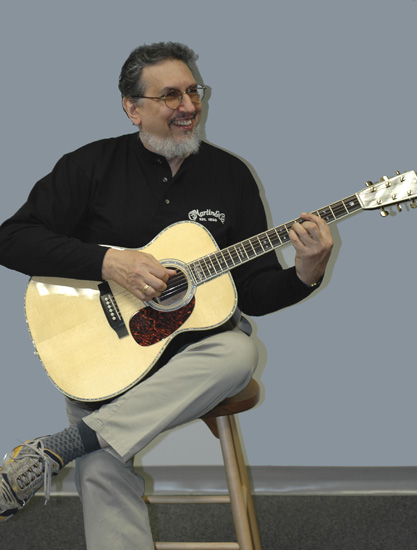
David Bromberg and His Martin M 42 Acoustic Guitar.

David Bromberg.

So anyways, anyone can go meet David Bromberg - but I suggest that you be a customer or serious shopper when going inside the violin shop of the world's foremost authority on American made violins. But he might be such a nice guy that he doesn't mind people walking in just to say that they've met him.
Given the opportunity - I would do exactly that, go inside the man's violin shop just to maybe shake his hand, and say,
"Sir, I've always appreciated your music."
One of the things that Bromberg has always considered a point of pride, and this is unique, is that he's said to have never allowed himself to be topped by a heckler. Now, I don't know what kind of person pays to see a show just to heckle someone - but Bromberg has probably played a lot of shows in his life, and probably a lot of them were either free, or shows in which he or whoever he played with were not the headline act. Truly, the man has a presence.
Bromberg, of course, is primarily a guitarist, and primarily plays the Martin acoustic guitar that was designed for him, The Martin M 42 - and no the "M" doesn't stand for Martin, but rather the size and shape of the instrument. The first video here features Bromberg doing some beautiful and lyrical traditional bluegrass type picking, and the second video features the pure hilarity showmanship of Bromberg and some blues guitar playing. He also fingerpicks very well, and as I close out what I hope to have been a nice enough introduction to a musician that you maybe hadn't heard of, it should behoove me to include some Bromberg fingerstyle guitar playing.

David Bromberg on African American Churches and Playing Fingerstyle Blues.

Thursday, July 12, 2012

The Martin 000-28EC - The Martin Eric Clapton Signature Series Acoustic Guitar.


The Martin Eric Clapton Guitar.

Virtually everyone everywhere in the English speaking world knows exactly who Eric Clapton is. This is exactly as it should be, in my opinion, for the man is a music legend the likes of which only comes around once. I've been very pleased to have seen Eric Clapton twice in my lifetime live, and both shows were outstanding, and very memorable. I'll never forget either one of them, and enjoyed the second one even though I was seated at the rear of the stage, and watched it looking at Clapton and Crew's backsides at Reunion Arena in Dallas. Reunion has since been imploded, and now, should you wish to catch a great concert in the Dallas area - You'll be seeing someone like Eric Clapton play at the American Airlines Centre.

The Martin 000 28EC


A Martin 000 28EC and Some Blues! Eric Clapton Surely Approves Of This Video!!

The Martin 000 28EC

So what is a Martin 000 28EC? Well any time that you see a "28" in regards to a Martin guitar model number, you know that you are looking at, or reading about a guitar with "28" appointments, and that means that the guitar in question is of solid rosewood back and sides, solid spruce top, or "sound board," mahogany neck, ebony fingerboard, and abalone inlay fret markers.
The "000" refers to the size of the body of the instrument, and it also means that it is a smaller guitar than a "D" model, or "Dreadnought" and larger than a "00" model.
Basically, the 000 28EC is a guitar that is closer in size to a traditional "Spanish Guitar," but has a thinner body, wider fretboard, and is made to Martin's famous "28" appointments. Now, I didn't realize this before looking over the Wikipedia article about C.F. Martin & Company, but it says in that article that there are actually FIVE Eric Clapton model Martin Guitars. I'm going to have to research that a little bit to find out what the other three are, but the second that I do know of is the 000 28ECB.
Every Martin guitar with a "28" in the model name is a guitar with all solid wood construction, and Rosewood backs and sides, and Spruce soundboard. The 000 28ECB is the same, but the "B" stands for Brazilian rosewood, which is used on that guitar instead of East Indian Rosewood. Most people find that Brazilian Rosewood, with it's strange patterns and colourful variations, is a more beautiful tonewood than is East Indian Rosewood. The fact of the matter is that Brazilian Rosewood is an endangered species of tree, and because of that, and supply and demand economics, Brazilian Rosewood is a MUCH more expensive tonewood. Also, not everyone can hear the difference between a Brazilian Rosewood guitar and an East Indian Rosewood guitar - but there IS a difference in the tonality that those two fine species of rosewoods produce in acoustic guitars. I can hear it, but I've got trained ears for it.
What is slightly different in the 000 28ECB is that even though most Martin acoustic guitars that feature Brazilian Rosewood also feature either an Engleman Spruce, or Adirondack Spruce soundboard, the Martin 000 28ECB features the standard Sitka Spruce soundboard - clearly, Eric Clapton prefers Sitka Spruce soundboards to the German Engleman Silver Spruce and the Adirondack Red Spruce that are often thought of as "superior" tonewoods for soundboards by other players. I've personally owned guitars with Adirondack Spruce soundboards, and there is a very slight visual difference in that tonewood and Sitka Spruce, I've not ever been able to truly say that I can hear a difference between them.
It goes without saying that both the 000 28EC and the 000 28 ECB are both OUTSTANDING acoustic guitars, but it's also pretty obvious that Eric Clapton's personal guitar is the Brazilian Rosewood model, the 000 28ECB.
These guitars are also available in sunburst finish, as are all Martin acoustic guitars with a solid spruce top.
Eric Clapton's signature is featured between the nineteenth and twentieth frets in mother of pear.

Martin Acoustic Guitars, and the 000 28EC.

Like all solid wood construction acoustic guitars by the legendary American Guitar Manufacturer, C.F. Martin & Company, both the Martin 000 28EC and the Martin 000 28ECB are exceedingly fine instruments that come with a lifetime warranty to the original owner. These are guitars that, if properly cared for, will not only last you a lifetime, but will become heirlooms for whoever in your family that you leave such a fine instrument to. These guitars aren't cheap, and they aren't inexpensive either. These are a professional's instrument - not just campfire beaters. Eric Clapton recorded his fabulous Unplugged album with one of them, and probably he's recorded a whole lot more with his as well.
These guitars are described as "a fingerpicker's dream," and I'm sure that that statement is accurate enough - but there's no reason that a flatpicker couldn't spend a lifetime flatpicking the daylights out of one too. After all, champion flatpicker Steve Kaufman regularly plays some 000 sized instruments, as well as his Dreadnought sized flat top steel string acoustic guitars. I've personally had my hands on at least two Martin 000 28EC guitars, and loved the hell out of both of them. I don't talk about or write about guitars that I've NOT had my hands on. I'd recommend one of these to anyone who's in the market for a fine, lifetime instrument, and who's to say just how much one of these guitars could appreciate in value. What's certain is that if it's not dinged up, it won't depreciate in value at all. What this is is another fine instrument from C.F. Martin & Company that will be desirable and sought out for the rest of our days.
This Hub was last updated on July 12, 2012

Sunday, June 24, 2012

Expert Guitar Repairs, Basics Of Identifying Acoustic Guitar Problems -And The Perretta Guitar Company


Repairs For High End Acoustic Instruments.

Lets face it so that we can deal with it properly, high end acoustic instruments are fragile, and the more you play them the better they sound, but they then are more likely to need repairs sooner rather than later. Acoustic stringed instruments are mostly made of wood and glue - when you figure in that steel strings, whether the number is four, six, eight, or twelve, it doesn't matter - steel strings tuned correctly or incorrectly, or in some alternate tuning - they create stress on an instrument mostly made of pieces of wood glued together.
Acoustic stringed instruments whether they be cheap ones or very fine ones are all subject to the stress applied to them by the strings on them, but that's not all that they are subject to - they are also subject to heat, to cold, to humidity, and to human stupidity. When you combine high tension steel strings and excessive heat to an expensive acoustic instrument - you often get a disastrous outcome. Heated wood glue softens in heat, and the steel strings can cause the neck to warp, the sound board to warp, or the bridge to lift up off the top of the instrument. Cold causes other problems. Excessive dryness causes still others, and excessive humidity causes others still. These are all problems that happen, but can be avoided.
The problems associated with acoustic instruments doesn't end with the string stresses, the elements, and foolishness though - playing acoustic instruments daily can just wear parts of them out regardless of how much you care for them, and how well you go about caring for them. It's similar to automobiles - if you love your car or truck, it doesn't matter, you know that if you drive it then it will most certainly need repairs at some point in time.

Worn Out Frets On Guitar Neck

Frets

Frets on guitars, mandolins, banjos, and any other fretted instrument don't serve the function of letting you know where you are in regards to which notes you wish to make, that's a secondary function of frets - what frets do is allow you to make those notes in the first place. Yes, of course fiddles or violins don't have frets - those things are played with bows, not fingers or picks. I'm certain there's more to it than that, and I'm certain that it's not relevant to this article.
In the picture above you can clearly see a fret board on the neck of a guitar without the strings on it, now look closely at the FRETS the metal pieces going across the fret board, do you see the deep dents in those frets? That just happens - it happens because steel strings are being pressed against the frets in order to make notes, and the more a guitar is played, the more damage naturally occurs to the frets. When the frets get dents in them so deep that the string can't be properly depressed and allowed to ring the guitar starts making buzzing sounds that are very unlike the sounds that the player desired when he fretted the note in the first place. those frets must be replaced, my friend.

The Nut

The above picture is of a guitar's nut - feel free to imagine that as a banjo's nut, or a mandolin's nut. Feel free to realize that there are also loads of other acoustic instruments that have strings and nuts, and that I'm not going to make any sort of attempt to list them all here. I'm presupposing that should you know what a banjo is, a guitar is, and a mandolin is - that you can and will see all similarities shared with less known instruments such as the mandocello, the Irish bouzouki, and the rest.
Typically, the best material for nuts is some sort of bone, but high grade plastics are also used. In any case, the density and malleability of the nut is relatively equally subject to being worn out by string vibrations. Think about it - hitting an open note with a thick pick is what gets you the most volume with an acoustic guitar, it's also what causes the most vibrations on the perimeter of the nut, which is what wears the thing out. If the groove in the nut is too big due to wear, your notes will THUD instead of RING, and your audience or yourself will not appreciate your music so well. It's got to be replaced, and can you make such a fine precision piece yourself? Not unless you're a machinist or master acoustic instrument repairs person you can't.

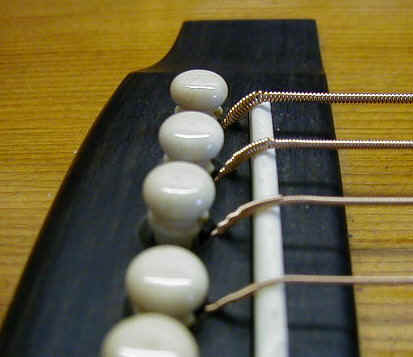
The Saddle

Now the saddle is liken unto the nut in that the strings must cross it and vibrate across it. Fine instruments always feature some kind of bone nut and saddle, and it's best to have some sort of bone for the bridge pins too - if you've a solid wood instrument that doesn't have bone nut, saddle and bridge pins, then you can only improve the volume, tone, and sustain of your instrument by getting them installed. Surely the saddle is less inclined to damage and wear than is the frets or the nut, but they do wear out just the same, and whenever someone has their nut replaced, then it's typical that they have their saddle replaced as well.
Now, you might be thinking that if I know so much about these things, then I should have just shot my own pictures and uploaded them - well, I might do that, but the nut picture already had edits on it that explain things perfectly wonderfully, but perhaps my bone bridge pins and saddle could have been photographed, and maybe it will be - but my frets are not damaged so I still needed some damaged ones in a photo to show to you - and that leads me to what this article is all about - expert repairs.
My old Santa Cruz guitar got played fairly heavily during some periods of years, and it was used when I got it in the first place, my Santa Cruz model D is a 1984 model, the one hundred and thirty first guitar that The Santa Cruz Guitar Company had ever made - and at one point I had to have repairs done to the thing so that it would sound and play correctly. I'd asked a man in a nearby small town about doing the job, and he quickly surmised that I had a very fine instrument to be repaired, and he suggested that I take my guitar to someone he considered superior to anyone in the area, and so of course I did so.

John's work, an old Martin - before and after.

John Fitzgerald - Master Acoustic Instrument Repairs.

So anyway, I was given the name and number of John Fitzgerald in Dallas, Texas; I called and arranged to bring him my Santa Cruz guitar, and I've not had problems with it since - but keep in mind the reason I've not had more problems of the exact same kind is that I've not been playing it anywhere near enough. It's just the nature of the guitar that the more you play it, the better it sounds - but the more likely it is to developed rattles, pops and buzzes that need to be addressed in order for it to keep that expensive guitar sound. Mr. John Fitzgerald replaced a few frets, and addressed the set up issues by making a new bone nut and bone saddle and installing them for me. Very friendly business like guy who loves guitars and mandolins, and I recall his wife being very friendly as well. I'd do business with this man again and will when I need it, and I recommend him and his services to anyone anywhere in the world with a great acoustic instrument that needs repairing. I believe that the pictures of that beat to hell old Martin over to the right, and his work on that should show you the kind of work that he can do - and if you have an instrument like that - then it doesn't matter where in the world that you are, you could ship it to John and have him restore it for you.
John Fitzgerald also makes his own guitars - that's what people like him do, and Perretta instruments are surely some fine instruments - check out his website and order your own custom built guitar by this master luthier whenever you wish, or e mail the guy and ask questions - he's the man so far as I'm concerned.
In any case, whether you need acoustic instrument repairs or not - I hope there has been some information in here that has been useful to a reader, and if I can personally help you with anything so far as understanding something about this subject or others, let me know.

The Cowtown SJ - Perretta Guitars.

Me, and the Santa Cruz that had been repaired by John Fitzgerald


Saturday, June 16, 2012

Kingslight Acoustic Guitars


John Kingslight.

In the world of acoustic guitars and acoustic guitar building there are many rising stars who make their own instruments and who try as hard as is humanly possible to create a musical instrument of wood and steel strings that is itself a work of art that someone can then appreciate for it's fineness, and use it to create music that is yet another art form altogether. These guitars of tremendous quality often have prices that reflect the long painstaking process of converting slabs of wood into things of sheer beauty - and only persons that do not understand that process and the joy that the product brings to it's owner, and then is transferred on to the fan of his music - all from the joyful hands of the instrument's creator - can not understand why these instruments nearly always cost several thousand dollars.
So here at this time, John Kingslight has yet to produce even his fiftieth Kingslight guitar. But Mr. John Kingslight has been building guitars since 1980 - with another small guitar company - Dillon Guitars. He says his aim is to build the "perfect guitar" and with that sort of goal, the man certainly has to have some drive. There are more small guitar companies in the USA and other Western Nations now than ever before - and there are a LOT of them who have demonstrated the abilities required to make instruments every bit as good or even better (it's a matter of opinion) than the Golden Age classics by C.F. Martin and Co. and the Gibson Guitar Company.
But John Kingslight is more than just a guitar builder - he's a minister, and a school bus driver - and he does those things because he loves people, and is attentive to their needs. With less than fifty Kingslight guitars built and sold - it's not strange that I've never seen one of them - but from what I can see and hear online, it's clear that Kingslight Guitars are going to be something that become more known than they now are - and who can say whether or not they'll be the next "holy grail" or Stradivarius type instruments in the days to come?

A Kingslight Acoustic Bass Guitar!

Kingslight Guitars

With such a small, but obviously up and coming company as Kingslight guitars - there's not a specific model that I'd want to discuss; and as stated - I've never even seen one. I can, however definitely cast a worthy vote in the direction of Kingslight from having seen many photos and heard the sound of the instruments in videos. Though Mr. Kingslight has yet to produce his fiftieth instrument under the Kingslight name - he's apparently made at least one of most every type of instrument - which serves to show that what he does and can do is not just a one of type of craftsmanship - but an across the board set of skills, rather, is what he's got to display.
The photo below of a Kingslight guitar head stock shows some beautiful abalone inlay which extends either into or from - depending on how you look at it - the head stock to the fingerboard. Let me assure you that nobody bothers to learn how to do things as beautiful as that until they've mastered already the guitar building part of the journey into Lutherie.

The Beautiful Kingslight Guitar Headstock and Abalone Inlay.

Kingslight Guitars

Kingslight Guitars are based out of Washington State, near Seattle. From the official Kingslight Guitar website you can either place an order for a guitar, or see what is in stock. Please be advised that ordering an instrument such as these - simply isn't something you can do in the Fall and expect to have done by Christmas - we're talking building a work of art here, and it can take quite some time to build a perfect guitar.
In any case - I'm already excited about these guitars, and I hope to get to put my hands on one someday. If you are in the market for having a custom built guitar - then be sure to check out Kingslight guitars before you place an order somewhere else.

Kingslight Guitars.

The Kingslight K28 Jumbo

Erik Mongrain Playing a Kingslight Guitar.


Twitter Delicious Facebook Digg Stumbleupon Favorites More

 
Design by Free WordPress Themes | Bloggerized by Lasantha - Premium Blogger Themes | Laundry Detergent Coupons