Wednesday, December 12, 2012

Emmylou Harris, Folk Music, And Gibson Guitars.


Emmylou Harris

Born in 1947 in the outskirts of Washington D.C., its perhaps surprising that Emmylou Harris became the queen of progressive country and folk music. She'd moved to Greenwich Village in 1969 to become a folk singer - but seemingly failed, and moved back home to wait tables, be a single mother, and perform in small coffee shop venues.
In 1971 that all changed forever when she met Gram Parsons, formerly of The International Submarine Band, The Byrds, andThe Flying Burrito Brothers. Gram Parsons had attended Harvard, was born a millionaire, and had a vision of what he called Cosmic American Music, and he made Emmylou Harris a big part of that as his singing partner.
Emmylou and Gram recorded the albums GP and Grievous Angel together and then Gram Parsons promptly died of a drug overdose. Following that, the bizarre case concerning his body, which was stolen by friends and burned in Joshua Tree National Park - Harris was left a budding star in her own right, and the remnants of Gram Parsons's band, and his vision of Cosmic American Music.

Emmylou Harris and Gram Parsons

Written Following The Death Of Clarence White - In My Hour Of Darkness - Emmylou Harris and Gram Parsons.

Emmylou Harris - Acoustic Guitar Girl.

I'll just have to come out and say it - I think of Emmylou Harris as one of the world's most beautiful women. There's no two ways about it. She may be past the age when most people consider a woman truly beautiful - but not me, buddy, not me! She may be quite a lot older than me - but that white hair is absolutely a crown of wisdom on her, and she's as beautiful now as she ever was.
I'm very opinionated, and especially when it comes to music - but I'm talking feminine beauty right this moment, and Emmylou was already beautiful, and already had the singing voice of an angel - but then she picks up an acoustic guitar and plays the thing whilst being beautiful and singing beautifully, and the the three tiered assault of beauty is then pretty much overwhelming.
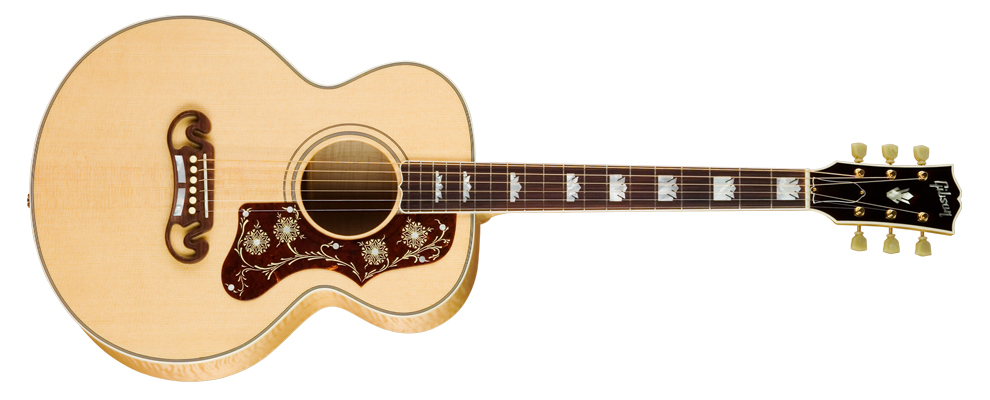
Emmylou Harris was featured on the front cover of the August 2001 copy ofAcoustic Guitar Magazine, and there's little doubt in my mind that she's been on their cover, and other similar publication's covers several times since then. She is well known as a rhythm guitarist, and primarily plays Gibson acoustic guitars. Emmylou Harris owns a number of Gibson guitars, most of them J 200s, which she considers the best acoustic rhythm guitar that there is, she also owns a similar Everly Brothers model by Gibson. Most often Emmylou Harris has been seen playing a blond Gibson J 200, which she inherited from Gram Parsons following his death - she's retired that instrument from being taken with her on the road, and had as exact a duplicate as possible built for her by Gibson.
While Ms. Emmylou Harris has most always been known for playing Gibson guitars, she also owns several Martin instruments as well, including an M - 38, an OM - 42, a prized 1937 00 - 28; and a Martin J - 40M.

Emmylou Harris With Her Gibson Everly Brothers Guitar Singing "Pancho And Lefty," by Townes Van Zandt.

Emmylou Harris - Singer and Songwriter.

Throughout most of the career of the beautiful Emmylou Harris, she's mostly been known as a singer who interprets the work of other songwriters in the manner and form that had been laid out for her by her late partner, Gram Parsons. Emmylou had mostly not written her own songs, why should she? There was always plenty of music out there that she could bring to life with her beautiful singing voice, and restrained phrasing style.
But she decided to write songs of her own again, as she had once before, and she did so so well that she won a Grammy for Red Dirt Girl in the Best Contemporary Folk music category in 2000.

The Emmylou Harris Guitar By Gibson

With the feedback from Ms. Emmylou Harris, the Gibson Guitar company created this instrument, the L 200 to be smaller, thinner, and more manageable for her - It's basically a smaller version of the slightly larger J 200, but with some custom appointments that let you know that this instrument is distinguished in ways other than it's slightly smaller size - it's similar in size to the Everly Brothers instrument which is also sometimes called the J 185 - depending upon which year it is, literally.
This is a fine guitar that would make an outstanding instrument for a flatpicker, fingerpicker, or of course, a singer songwriter who plays rhythm. It's of solid maple back and sides, and with a solid Sitka spruce top, features custom mother of pearl inlay on the rosewood fret board, and on the bridge. Gibson's Gotoh tuning machines are a point of pride for efficiency and sustained accuracy. I've priced this outstanding instrument at around $ 3,300, and of course that comes with a limited lifetime warranty, and a hard shell case.
This guitar comes pre equipped with Gibson's LR Baggs pickup and electronics for acoustic/electric play.

The Gibson Emmylou Harris Guitar!

Emmylou Harris - The Sweetheart Of The Rodeo.


The Gibson Nick Lucas Special, a Twelve Fret Acoustic Guitar Beauty.


The Resurgent Gibson Nick Lucas Model Acoustic Guitar.

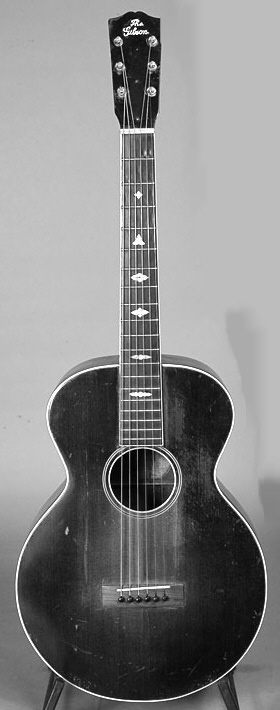
The Gibson Nick Lucas guitar is truly a special guitar, and in recent years it is making a huge comeback as far as a collector's piece of prized value, and a choice model guitar for flatpickers, and this is especially due to the beautiful guitar playing of Norman Blake. This great Gibson acoustic guitar is a much smaller instrument than a typical Martin or Gibson model dreadnought flat top, and the Nick Lucas model is also different from the norm (pun intended) in that it is a guitar with twelve frets clear of the body, rather than fourteen.
Norman Blake, of course, is not just a guitarist - but a multi instrumentalist who happens to be most associated with the acoustic guitar. Traditional music typically sounds best on great American Vintage Guitars, and Norman typically finds old songs to perform that virtually no one else remembers, and when he finds an old instrument with which to perform them, and make them shine - he brings both the songs and instruments back to life for us all.

Norman Blake With His Nick Lucas Special

Specifications

The Gibson Nick Lucas model acoustic guitar is a guitar with a slightly arched, spruce top, and mahogany back and sides.  It's a larger guitar than the Martin 000 18 guitar, which would be it's closest Martin model in comparison, but the Martin 000 guitars are 14 frets clear of the body acoustic guitars, and this Gibson model is a twelve frets clear of the body guitar.  The slightly arched top isn't a common or easy thing to achieve, and the nice mother of pearl, or abalone inlay in the neck of the guitar are also things that make this a very nice guitar, and one that will be more expensive than the typical mahogany back and sides, and spruce top instruments on the market.  Now, there's not data available to me, but I have to take the great Norman Blake's opinion here, and that is that the twelve fret model guitars seem to produce "punchier," or more distinct notes; and when you combine that with tonal immediacy that comes with mahogany back and sides, you have to realize that this is going to be a loud guitar, and an excellent instrument for playing both leads and rhythm.  These guitars are always painted black, but I'm positive that this instrument could be ordered from the Gibson factory in sunburst, or natural finish as well; and besides that, there are now so many fine, small production lutheirs in the United States and Canada, that with some patience and money, one could have an exact copy built, or hot rodded up to your specifics, if you're into that sort of thing. 

The Gibson Nick Lucas Guitar!

Conclusion.

Both the original Gibson Nick Lucas model acoustic guitars, and the modern reissues are bound to be some fine, heirloom, and collectable model guitars.  These are the types of instruments that one buys for professional work, or simply because you love instruments like this, and can afford them.  Though this guitar is going to be a louder guitar than most Gibson acoustics, it's not something that is going to compare, really, to the volume that can be provided by a Gibson J 200, or Gibson SJ 250 Monarch; however, this guitar is going to be so much smaller compared to those great, and very large models, that it would be much easier to manage for the averaged sized man or woman.  Norman Blake is the man who has brought this model back to the forefront of the acoustic guitar market; and perhaps he should be thanked for that if you ever get to own, and love playing on of these fine instruments, with roots deep in American pop and folk music.
~WTS~

This Guy Plays Several Gibsons, and He Can Play!


Martin SWDGT Smartwood Dreadnought Acoustic Guitar


Martin SWDGT Smartwood Dreadnought Acoustic Guitar


What Is A "Smartwood" Guitar?

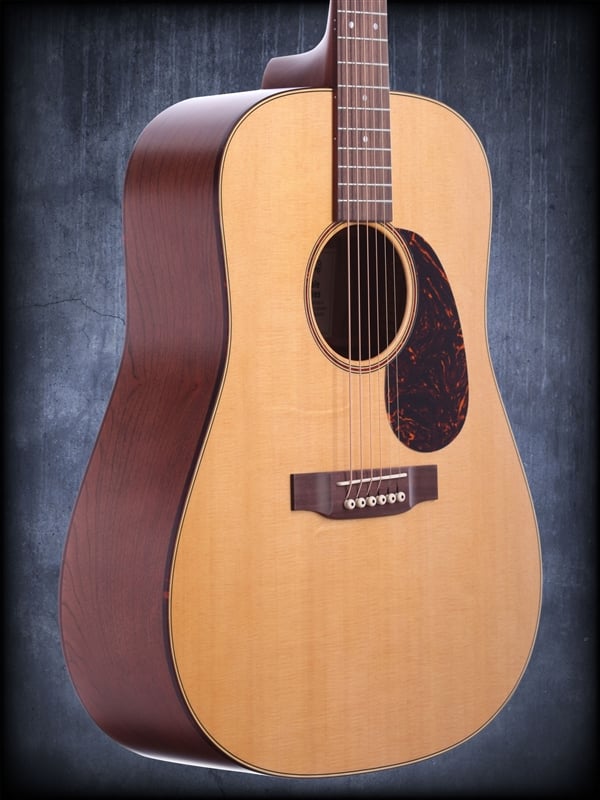
A "conscious" guitar, made in keeping with ecological responsibility, the Martin SWDGT features a solid Sitka spruce top, certified solid cherry wood back and sides, mahogany neck, and a certified katalox bridge and fingerboard. The neck has a low profile shape and an adjustable truss rod. Appointments include pearl dot inlays and a natural satin finish for enhanced tone. Made with specifically ecologically sustainable woods.
Basically, this guitar is the most ecologically friendly instrument on the planet. It's the guitar that every conservationist and tree hugging type the world over can buy, play, love, tell their friends about - without a bit of guilt. Yes, this is a REAL Martin guitar - it's all solid wood in construction - no laminates at all, but even though it's a guitar with a solid Sitka Spruce sound board top - the wood is classified by Martin as RESCUED.
The back and sides of this instrument are solid cherry, and Martin classifies this wood as Sustainable Solid Cherry. I don't typically like to write articles about guitars that I've not handled and picked out a tune or a dozen on. I think that I have played this guitar in a guitar center, but I'm not certain. I tend to pick up and pluck something out of every guitar that I see. The simple facts of the matter here are I just trust C.F. Martin & Co. with everything that they do or say. They are, after all, the world's premier acoustic guitar manufacturer, and so far as I know, the oldest company in the United States of America. Nobody has as much potential interest in the world of acoustic guitar manufacture as does C.F. Martin & Co. When it comes to sustaining, and making sustainable, steady supplies of tone woods for guitars - these trees are acoustic guitar manufacturer's very life's blood, and the C.F.Martin & Company only make the world's most highly reputable guitars.
The only thing about these guitars that make me wonder is the fingerboard material, which is Solid Sustainable Katalox. I've just never heard of this Kataloxstuff, but if Martin is using it, I'm certain that it is good wood. Typically either ebony or rosewoods are used for fingerboards. I've got a guitar with each - and I'm certain that ebony is the better material for fingerboards - but like I said, if Martin is using katalox for these guitars, I trust them that katalox is an outstanding material for the purpose. The Martin people, if not the best in the entire world, are the definite equals to any others.

The Martin Smartwood Dreadnought Acoustic Guitar.

Tonewoods

First of all (and speaking from a steel string guitar perspective), let's discard the notion that some species of wood make good instruments and that others don't. The concept of tonewood is a hoax. Of the few things that we can do to a guitar and still call it a guitar, changing the wood it is made of will have the least impact upon the quality of the sound that it produces. The tonal difference between a mahogany guitar and a rosewood guitar is exactly the same as the difference between two mahogany guitars or two rosewood guitars. Can you tell what a guitar is made of while listening to an unfamiliar recording? No one I know claims they can. No one at the blind listening sessions I've attended could reliably distinguish between mahogany and rosewood guitars, or maple and koa guitars for that matter. - John Calkin.
So far as the paragraph above is concerned. I totally disagree with every word of it. I CAN hear the difference between a Rosewood guitar and a Mahogany guitar. Besides that - nine times out of ten I can hear the difference between Brazilian Rosewood and East Indian Rosewood guitars. I just can. I can hear the difference between a Fender Stratocaster, Telecaster, and I can always hear a Gibson Les Paul; So Mr. Calkin might know what he's talking about when it comes to building guitars - but I think his hearing has been damaged a bit at this point.
The American Wild Cherry as a tonewood is said to produce a tone sonic-ally somewhere between that of a maple and that of a mahogany bodied guitar. That being the case, my personal recommendation to someone shopping for a guitar like this would be to pick up a Martin D 18 and play it for a minute, then pick up the Smartwood Martin and play it for a minute - they are going to sound similar, and in a base level D 18, the price will be within a few hundred bucks or so of being the same as the Smartwood. Choose the one that you want, and remember that guitars such as any solid wood guitar made by C.F. Martin and Company - always sound better with years of playing behind them.
These guitars retail at $1,400.00 dollars, and as do all Martin guitars, they come with a lifetime warranty to the original owner, and a hard shell case - that's probably environmentally friendly too.

Have a Listen To some Music on a Martin Smartwood Guitar!

Monday, October 15, 2012

Clarence White With The Byrds.


The Byrds – Country Music Fabulous

Though The Byrds underwent many a change in their musical membership within the band over the years, they were the single American band that could ever compare in any way to the greatness of the British Invasion bands such as The Beatles, The Rolling Stones, andLed Zeppelin.  The early incarnation of The Byrds was fabulous and legendary – they pioneered Folk Rock, and made some obscure Bob Dylan greatness more palatable for everyone.  When asked who their favourite American band was, the members of The Beatles had answered, “The Byrds.”  The original version of The Byrds was legendary, and created some of the finest music of the 1960′s, but it was rather short lived, and the version of the band that included legendary guitarist Clarence White would outlive the original by far – Clarence white would become the member with the longest tenure save founder Roger McGuinn.
Clarence White

While the album Sweetheart Of The Rodeo was not the first album in which the great Clarence White appeared with The Byrds, and neither was it the first album by that band that featured straight up classic country music styling, it was absolutely an album completely of traditional country music by very non traditional musicians.  Fiddle, traditional acoustic guitar rhythm by the world’s finest practitioner  of such, slide or pedal steel guitar, mandolin, and even banjo would soon become the canvas of the band – quite different from the sort featured with epic hippie master-works such as Eight Miles High.  Besides guitar genius Clarence White, and the other great talents The Byrds had to offer, Gram Parsons was along for the ride on this one, and though his ride and the ride of Clarence White would both be short lived, as Bill Hicks famously made us all aware much later, It’s Just A Ride!
The Byrds:  Live At The Filmore
But Clarence White was not just an acoustic guitarist, but also one of the most innovative electric guitarist in the history of the instrument, and to showcase that was why he joined and was hired by The Byrds, and perhaps the album Live At The Filmore was the album that showcased all he had to offer with his Fender Telecaster and his B Bender wonder tool.  He left everyone drooling for more, and bewildered totally.  Even persons such as Jimmy Page were heard around the world saying, “How The Devil Does He Do That?”  Especially featured within the new context was the Bakersfield sound and the style was perfect for Clarence White, ever the neo traditionalist within his chosen genre.

The Byrds: Untitled

With the double Untitled album the music of The Byrds seemed to meld together all of the elements that made them great, they fused hippie era sensitivities  with country rock, and also some of their psychedelic acid rock themes.  Half the album was recorded live, while the other half was new studio releases.  The image on the cover was surely meant to be “trippy,” and the year was 1970, the 60′s might have been over, but hippies don’t just up and change with the dates.  Some of the highlights of the album come in the form of Easter philosophical themes in the lyrical content, and of course, the famous Chestnut Mare – a song about the love of horses.


Now pretty often the guitar playing of Clarence White wounded up buried in the mix from the studio, and despite how unforgivable this all is, it is done, and until someone remixes the master tapes for us all, we have to deal with it.  Guess what?  The music is all terrific just the same.
Let's hear some!


Sunday, August 26, 2012

The Jasmine Model Acoustic Guitar by Takamine


The Jasmine, by Takamine

Years ago while living in a large, communal recovery house in Dallas, Texas; called "The Reiger House," on Reiger Avenue, I had made arrangements with the owners of the place to have a friend of mine who'd just got back from a walking tour of Europe's heroin usage areas move into my room. Nobody got a room to themselves there - so it's probably best to have a roomate that you already know. Better the devil you know than the devil that you don't. Something like that. The room mate situation wasn't so terrible though - he brought with him an acoustic guitar, a "Jasmine" model by Takamine. I swear to you - I couldn't have been more pleased with my new room mate, the Takamine Jasmine - it's a great guitar to have in such places, and any other place that one will go!

The Jasmine Acoustic Guitar By Takamine

Another Example of a Jasmine, By Takamine.

The Jasmine Acoustic Guitar, By Takamine.

Let me let you all in on a few differenent secrets here - no conspiracies, just facts; I'm a huge fan of high end, very expensive acoustic guitars. But here is a simple fact for you - you don't need a two thousand dollar guitar to be a good guitarist, have a tremendous amount of fun, or even to learn some very professional level musicianship skills on acoustic guitar. Here's another secret for you - in this day and age I'm all for buying American made products, and you should be too; but there's also something to be said for getting what you want out of the money you spend, and the best deals on great, beginner to intermediate level acoustic guitars are all guitars made in Japan by companies like Takamine, Yamaha, and Alvarez.
Look, I have no idea what kind of money that you have. I'm gonig to assume here that you're strapped to the max like I am, and that if you spent one to five thousand dollars on that Martin Guitar that you've always dreamed of - that if that thing came up missing, was burned in a house fire, etc, etc, etc - it would be just as devestating to you as it would be for me. I know about such worries - I have some guitars that I literally think that I could flip out completely on you, or on anyone should something happen to them. When I went to stay in Northern California last year my friend/host over there begged me to bring my Santa Cruz Guitar. I said,
"HELL NO. My Santa Cruz ain't riding in the back of nobody's pick up truck - it's the most precious thing that I own."
All I needed was THIS guitar, the Jasmine by Takamine - if I had had one of these, I'd have travelled to California with a guitar, and played the whole time I was there. I didn't have one. I lost out. I could have spent my days down at the Seaside, California Barnes and Nobel, or Starbucks drinking coffee, playing guitar, and collecting one to twenty dollar bills in my Minne Tonka Fedora hat for tips.
It literally could have PAID my way. When I went to beautiful San Francisco, and walked the streets of that magical la la land, I perused many a poor redneck like myself on the street corner collecting money for playing a cheap Japanese guitar just like the Jasmine by Takamine. Those guys all seemed to sneer at me in hindsight, as they pocketed MY cash.

Everybody needs a Jasmine Guitar by Takamine

Are you interested in finding out if you have any talent for playing guitar, but don't want to spend a lot of money on something that you might not get into, but you don't want to not have a legitimate guitar? The Jasmine by Takamine is for YOU.
Are you thinking about buying a guitar for a child that may or may not take to being a serious student of the instrument, or of music - but you don't want to buy him or her something that isn't any good? The Jasmine by Takamine is for YOU.
Are you a real guitarist, and need a real guitar that you aren't afraid of getting scratched up down at the deer lease, but your deer hunting buddies demand that you bring a guitar? The Jasmine by Takamine is for YOU.
Are you a traveler heading off on a journey, and you don't know when you'll return, or if you'll return at all - and you don't want to risk the family heirloom guitar on such a fateful and unpredictable journey? The Jasmine by Takamine is for you?
Do you just need a campfire guitar to sing Kumb ba Ya My Lord for the kid - owe's? Jasmine by Takamine is for YOU.


Twitter Delicious Facebook Digg Stumbleupon Favorites More

 
Design by Free WordPress Themes | Bloggerized by Lasantha - Premium Blogger Themes | Laundry Detergent Coupons